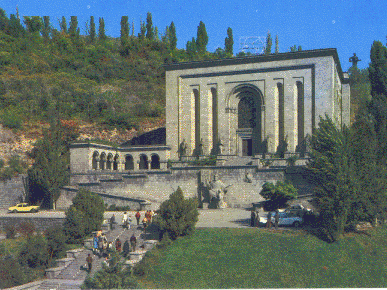
This is the famous Institute of Ancient Manuscripts built by architect Mark Grigorian in 1957. Everyone who comes to Yerevan visits the institute because it is one of the city's major landmarks.
A flight of steps leads to the monument to Mashdots (361-440), the author of the Armenian alphabet. Standing in front of the entrance are sculptures of the great thinkers, scientists and cultural figures of ancient times - Toros Roslin(13th century), Grigor Tatevtsi (15th century), Anani Shirakatsi (7th century), Movses Khorenatsi (5th century), Mkhitar Gosh (12th century) and Frik (14th century).
Madenataran, which in old Armenian means "depositary of manusctripts" and "library", is a large research centre for the study and safekeeping of manuscripts. Poeple in ancient and medieval Armenia took great care of their manuscripts as they played an important role in the people's struggle against spiritual anslavement and assimilation. All the large monasteries and universities had special scriptoria where master calligraphers made copies of books by Armenian scholars and writers and the works of foreign authors were translated into Armenian.
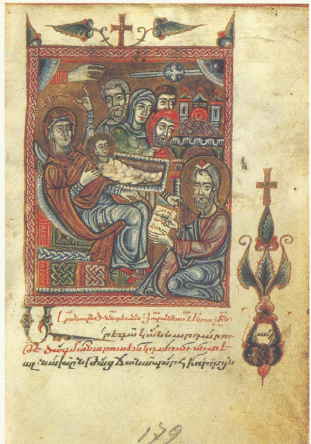
tens of thousands of Armenian manuscripts were destroyed in the countless wars and invasions that revaged the country, and only 25,000 manuscripts volumes have been preserved to our times. Of these there are more than 10,000 folios and also 2,500 fragments in Madenataran. The rest are to be found in museums and libraries all over the world, mainly in Venice, Jerusalem, Vienna, Beirut, Paris and London.
Special Armoured basements where the manuscripts are protected from mould and fire, are the "holy of holies" of Madenataran.
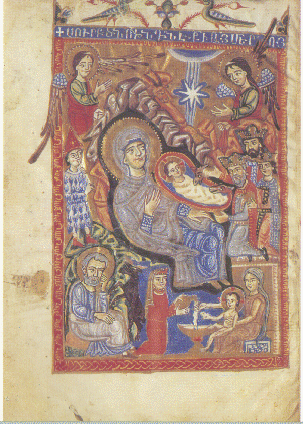
The oldest parchment book in the depositary is the Godspel of St. Lazarus written in 887 A.D., although there are earlier specimens which are incomplete and dates from the 5th-8th centuries. The oldest manuscript on paper refers to 981 A.D. Visitors, of whom there are more than 50,000 a year, can see the best specimens of beautifully illustrated hand-writeen books displayed in the exhibition hall on the second floor. These books contain works on history, philosopy, mathematics, medicine, astronomy and geography. The largest in the world (34 kilograms) Armenian manuscript is displayed on a separate stand. It took seven hundred calf skins to make it. Next to it is a tiny book measuring 3x4 centimeters and weighing a mere 12 grams.
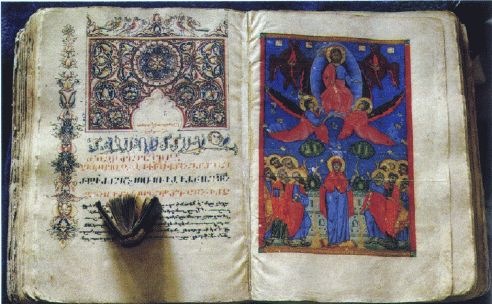
Some of the other curiosities are Godspels dated 1053, 1193 and 1411 with unfading virtuoso miniatures, translations from Aristotele, a unique ancient Assiryan manuscript and an ancient Indian manuscript on palm leaves in the shape of a fan.
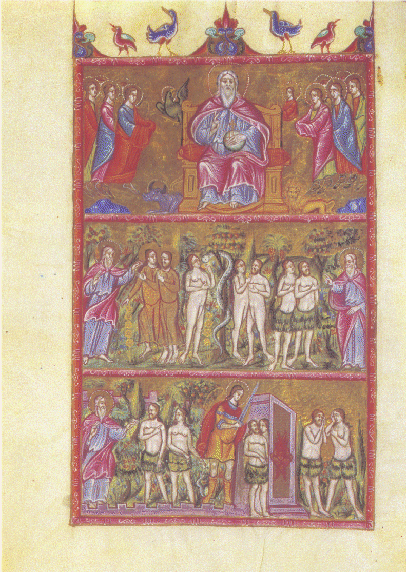
The madenataran collection of manuscripts is of vital importance for historical and cultural research not only of Armenia but of the entire Transcaucasus, Asia Minor and many countries in the Middle East. Some of the works of the great thinkers of ancient times have been preserved only in Armenian translation. Among them we find Chronicle of Eusebius od Caesarea; On Nature, a reatise by the ancient Greek philosopher Zeno and a number of others, the originals of which have been irretrievably lost.
Madenataran has also a fine archive department which has more than 100,000 documents belonging to the 14th-19th ceturies. These include charters, diplomas, letters which contain a wealth of material on the history of the political and socio-economic life of Armenia and neighbouring countries.
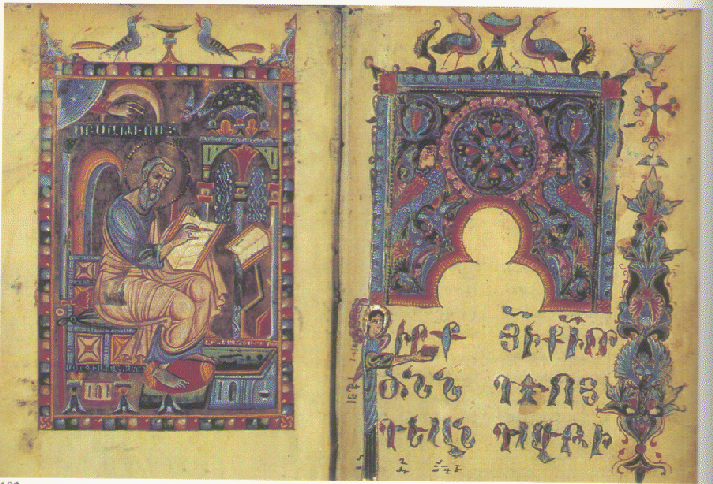
A through study of the manuscripts, many of which have been restores in special laboratories, help experts in various areas to shed light on many questions of the culture and history of the Caucasus and the Middle East, let alone Armenia. Armenian scholars and orientalists from all parts of the world come here to do research.